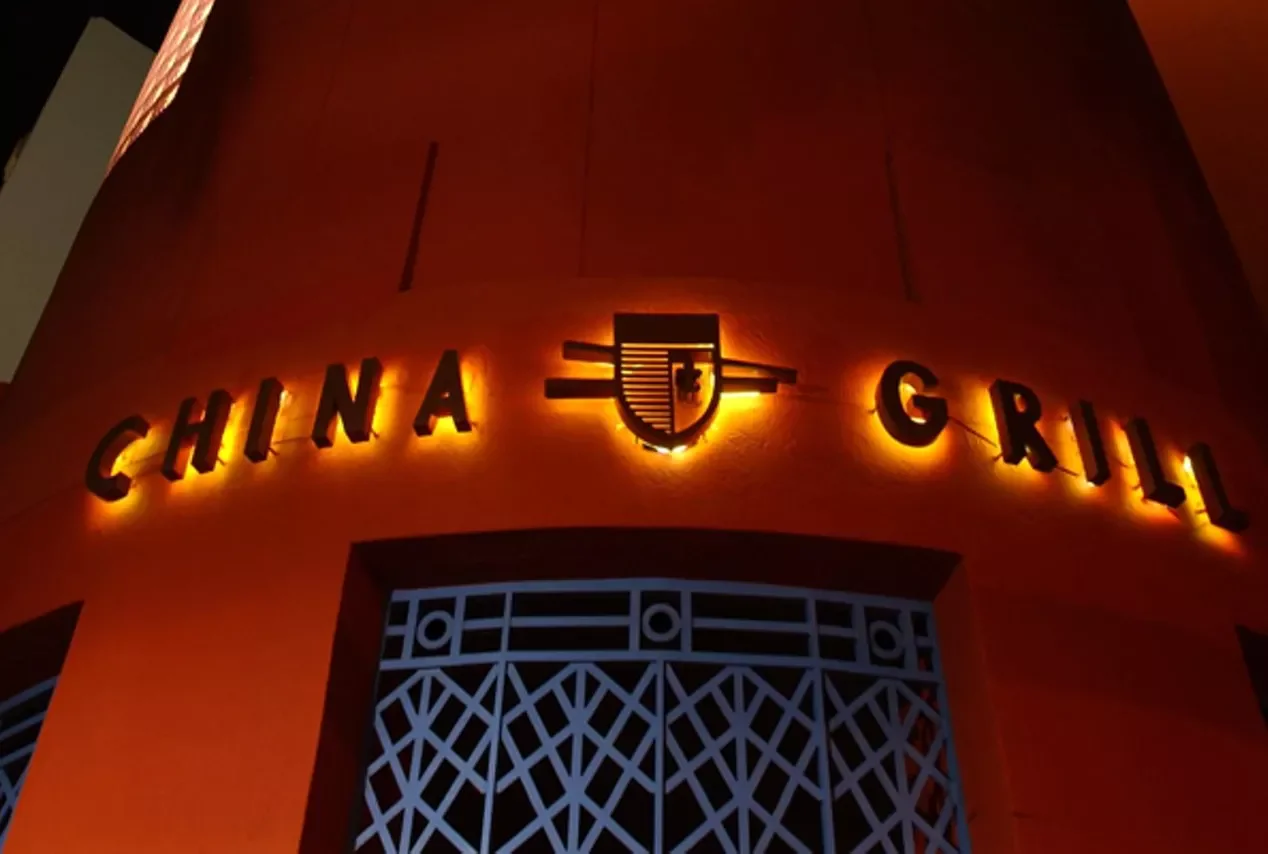
Jeffrey Chodorow signed the Bal Harbour Shops lease in July 2021, and China Grill, the South Beach restaurant he closed in 2012, opens at 9700 Collins Avenue in summer 2026. Five years from signature to service, fourteen years from the original closure, and the spread between those numbers carries the broker story.
The 2021 deal landed Unit 135 on the first floor, the space Stephen Starr’s Le Zoo had operated since late 2015. Le Zoo’s lease ran through April 2025 and Chodorow had to wait. The Chodorow name is the entire reason this address comes back to life, so a tenant transition that would normally be a six-month gap stretched to nearly four years on the back end, plus another twelve to fifteen months of construction and design before service.
For operators thinking about a flagship relocation or a return to a legacy address, the timeline is unforgiving. Bal Harbour Shops is exceptional in this regard, with $3,000 in sales per square foot and a landlord that plays a long calendar against that productivity. We see the same calendar in select luxury locations across our markets, and operators routinely underestimate it.
The Brand Is the Operator
China Grill at 404 Washington Avenue opened in 1995 and ran for seventeen years before closing in 2012. The room served Asian fusion before Asian fusion was a category in Miami. It drew Sly Stallone and Star Island residents into the dining room, and it won New Times’ Best Restaurant Decor in 2005. Chodorow’s empire at its peak ran 24 locations across three continents, and the original China Grill and Asia de Cuba both closed as the brand contracted.
What is left after the contraction is one Miami partnership at Komodo with David Grutman, and now a brand restart at Bal Harbour. The asset moving forward is Chodorow himself and the room he can fill on a Tuesday.
We work this question every week on the sell side. How much of a concept’s enterprise value sits in the operator versus the building, the systems, and the brand independent of the person running it? China Grill is the textbook end of that spectrum, where the brand and the operator are functionally the same asset. When Chodorow stepped back in 2012, the brand stopped with him. When Stephen Starr stepped back from Le Zoo in 2025, his organization rotated and is opening Slim’s at the same mall in spring 2026, which is a different operating model entirely.
An operator getting ready to sell needs to know which model the business resembles. If the customers come because of the founder, that is a real and durable business, and the buyer pool prices it accordingly. The discount on operator-dependent revenue gets larger as the deal size goes up, and above the seven-figure SDE line, buyers expect transferable systems before they will write a full price.
Bal Harbour’s Tenant Rotation
The mall is in the middle of a multi-year tenant cycle with several anchor restaurants moving at once. Aba departed first, followed by Le Zoo at the end of April 2025 after a ten-year run. Stephen Starr is opening a new steakhouse called Slim’s at the property in spring 2026. China Grill takes the Le Zoo footprint in summer 2026. Makoto, Starr’s longtime Bal Harbour sushi flagship, already relocated within the property in 2022.
That kind of turnover is what a high-velocity luxury landlord looks like. Whitman Family Development is curating an F&B mix that will define the next leasing cycle, and the tenants moving in are either established brands like China Grill or established operators expanding within the property like Starr and Makoto. Nobody is debuting an unproven concept at this address, and the risk profile sits at the opposite end of what an operator would see at a Wynwood or Edgewater opening.
Miami operators considering an exit to a luxury landlord venue end up underwritten on the same criterion Whitman is applying. Does the brand or the operator have a multi-cycle track record? A yes opens access to this lane, while a no means working in a different market with a different buyer pool.
The Summer 2026 Stress Test
A 14-year gap between closure and reopen tells you about Chodorow’s confidence and about Bal Harbour’s patience. It also tells you about the F&B asset class at the top of the Miami market. The deal pool for trophy luxury locations is narrow, the brand requirements are real, and the timeline runs on the landlord’s clock rather than the operator’s. Every market we cover has a version of Bal Harbour Shops and a Whitman-type curator running it, and we work those calendars across SoCal, Boston, NYC, and Miami. Operators who want a shot at those addresses need either a name with a track record or a partnership with someone who has one.
The summer 2026 opening will tell us whether the Chodorow-era playbook still works at 2026 check averages and 2026 labor costs, and that result will matter for every operator pricing a Miami luxury exit. For operators weighing where their concept sits on the operator-versus-brand spectrum, a confidential conversation about transferable value before the next lease or sale conversation usually costs nothing and changes the entire shape of the deal.
Sources
- Miami New Times, “The Most Anticipated Miami Restaurants Opening in Summer 2026” (2026-05-29)
- Miami New Times, “Famous South Beach Restaurant China Grill Reopening After 12 Years”
- Commercial Observer, “Jeffrey Chodorow Plans Comeback With Restaurant at Bal Harbour Shops” (2021-12)
- Miami New Times, “Le Zoo to Close After 10 Years at Bal Harbour Shops”
- Miami New Times, “Swanky New Steakhouse to Open at Bal Harbour Shops”
Businesses Mentioned
Tags