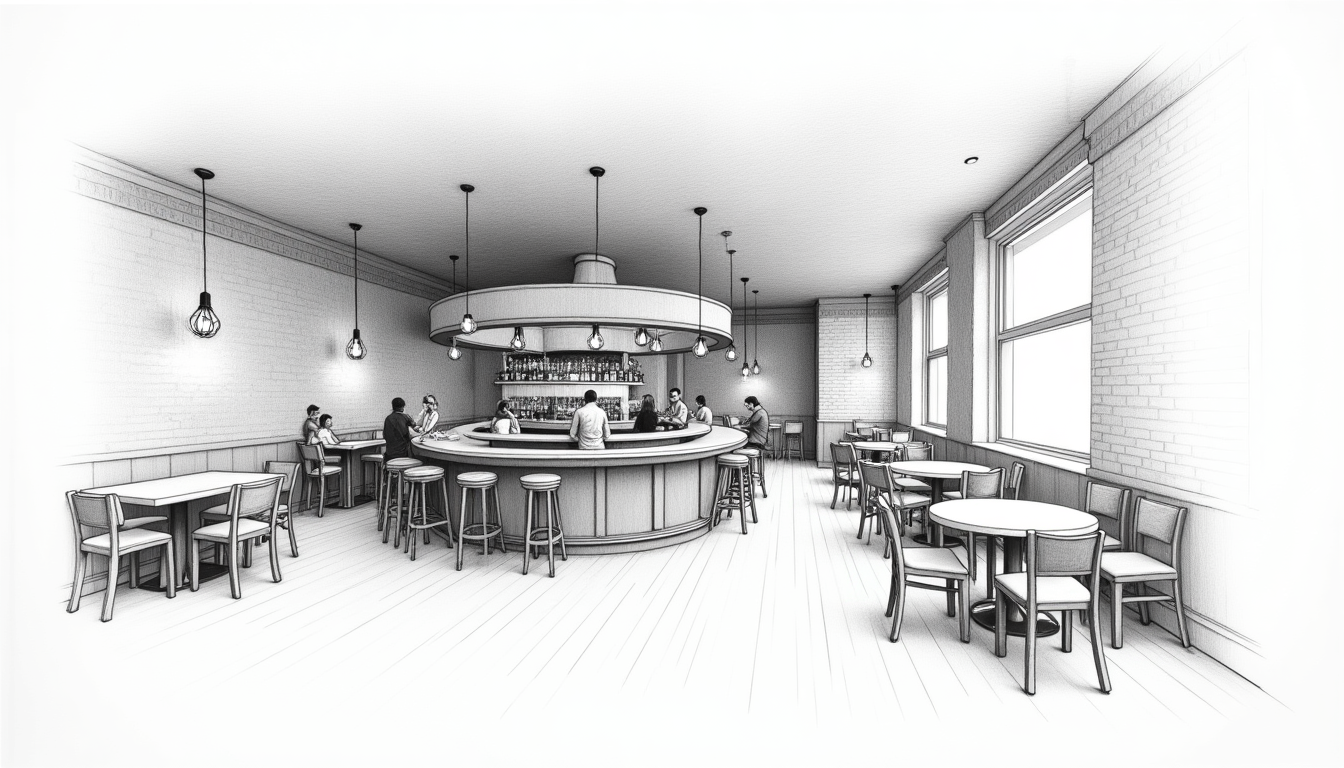
Dylan Welsh and Hawkeye Hospitality opened The Chester at 1121 Dorchester Avenue near Savin Hill the week of May 11, 2026, taking the 6,000-square-foot ground-floor space inside a newly built 21-unit condo complex. The room runs 11:30 a.m. to 1 a.m., with dinner service first and lunch starting within the second week, brunch rolling out two to three weeks after that. The Chester joins Welsh’s portfolio of Five Horses Tavern (Davis Square in Somerville and the South End in Boston), Elm Street Taproom (Davis Square in Somerville), and Garrison House (Brookline Village), making it Hawkeye’s fifth Boston-area room since Welsh opened his first restaurant in 2011.
A new tavern opening in Savin Hill is one story on its face. The operator profile and the mixed-use lease structure are the operating story for Boston/New England multi-unit operators reading this cycle.
What the operator profile is saying
When a regional operator on the fifth Boston-area room signs a ground-floor anchor lease in a newly built 21-unit condo project, the move is making a specific operating bet. The 6,000-square-foot space supports a 47-seat, 360-degree-access bar at the focal point with a capacity of 216, alongside a 24-line draft program and a kitchen built around modern American tavern fare. The Boston Licensing Board approved the liquor license at a March 2026 hearing, with the license transferred from developer Joey Arcari, who also built the 21-unit apartment building above the restaurant. Anne Moynihan, the head chef, has been with Hawkeye for about four years. Welsh framed the project to the Dorchester Reporter as an “affordable” dining experience built around “high-end food and beverages.”
That set of facts is the multi-unit operator profile clearing the 2026 cost stack better than the single-unit independent. Design, beverage program, head-chef tenure, and back-office costs are amortized across five rooms. Lease economics are negotiated on the platform’s track record, not a single concept’s projections. Liquor licenses, license transfers, and licensing board approvals come faster when the regulatory pattern is already known to the board.
The 2026 squeeze on independents
The reason the operator profile matters is the cycle 1121 Dorchester is opening into. The number of independent restaurants in the United States declined 2.3% in 2025, a net loss of about 9,500 locations, bringing the total to 412,498. The Top 500 restaurant chains grew unit count 1.5%, added roughly 3,600 units, and now make up 35% of industry footprint. Technomic’s David Henkes told reporters that “it’s harder than ever, for the industry in general, but for independents in particular to operate.”
The National Restaurant Association’s 2026 State of the Industry release reported that 42% of operators said their restaurant was not profitable last year, 60% reported softer customer traffic, and more than nine in ten flagged food, labor, insurance, energy, and swipe fees as significant challenges. National restaurant M&A is reading the same conditions, with Capstone Partners reporting total sector deal volume down 28.9% year-over-year and strategic-buyer activity down 37.1% in their October 2025 update.
A multi-unit operator on the fifth Boston-area room, with a 15-year operating history dating to 2011, is amortizing the same cost stack the single-unit independent is absorbing alone. That is the operating gap the Hawkeye expansion is opening into.
The Savin Hill mixed-use corridor
The lease deal at 1121 Dorchester is the second operating signal in this story. A ground-floor F&B anchor sitting under a 21-unit residential project gives the operator a built-in walk-up daypart from a corridor the residential developer is also activating from the upstairs pipeline. The license transfer from the developer ties the operator’s runway to the building’s own absorption timeline, which compresses the lease-up risk on both sides. The Boston Licensing Board approved the transfer in March 2026 without neighborhood opposition surfacing on the record. Five rooms across Davis Square, the South End, Brookline Village, and Savin Hill put Hawkeye on a multi-corridor Boston footprint matched to the metro’s residential growth corridors.
The Boston Operator Read
The multi-unit operator on a residential mixed-use ground floor with a developer-aligned license is the deal pattern winning in 2026 Boston, and the same read applies across the New York, Miami, and California coastal markets we cover. The single-unit independent on a standalone street-front lease with no residential pipeline above is fighting that same cost stack alone. The way I read it, the multi-corridor multi-room operator has the structural advantage right now, and the gap is widening rather than closing.
The strategic value of a single-location independent with a clean P&L is highest right now to a multi-unit operator who can amortize back-office, beverage program, and labor compliance across multiple rooms. The acquisition fit is exactly the Hawkeye profile, with platforms already running multi-corridor and looking to fill in a complementary daypart or neighborhood. If this sounds like your situation, we’re here when you’re ready, no pressure, no timeline.
Sources
- Dorchester Reporter, “Get a sneak peek inside Dorchester’s next hot-spot: The Chester” (2026-05-09)
- Dorchester Reporter, “New tavern approved on Dorchester Avenue” (2026-03-06)
- Restaurant Business Online, “The number of independent restaurants declined by 2.3% in 2025” (2026-04-29)
- PR Newswire / National Restaurant Association, “Persistent Cost Increases and Enduring Demand Will Shape the Restaurant Industry in 2026” (2026-02-12)
- Capstone Partners, “Restaurant Market M&A Update – October 2025”
Businesses Mentioned
Tags