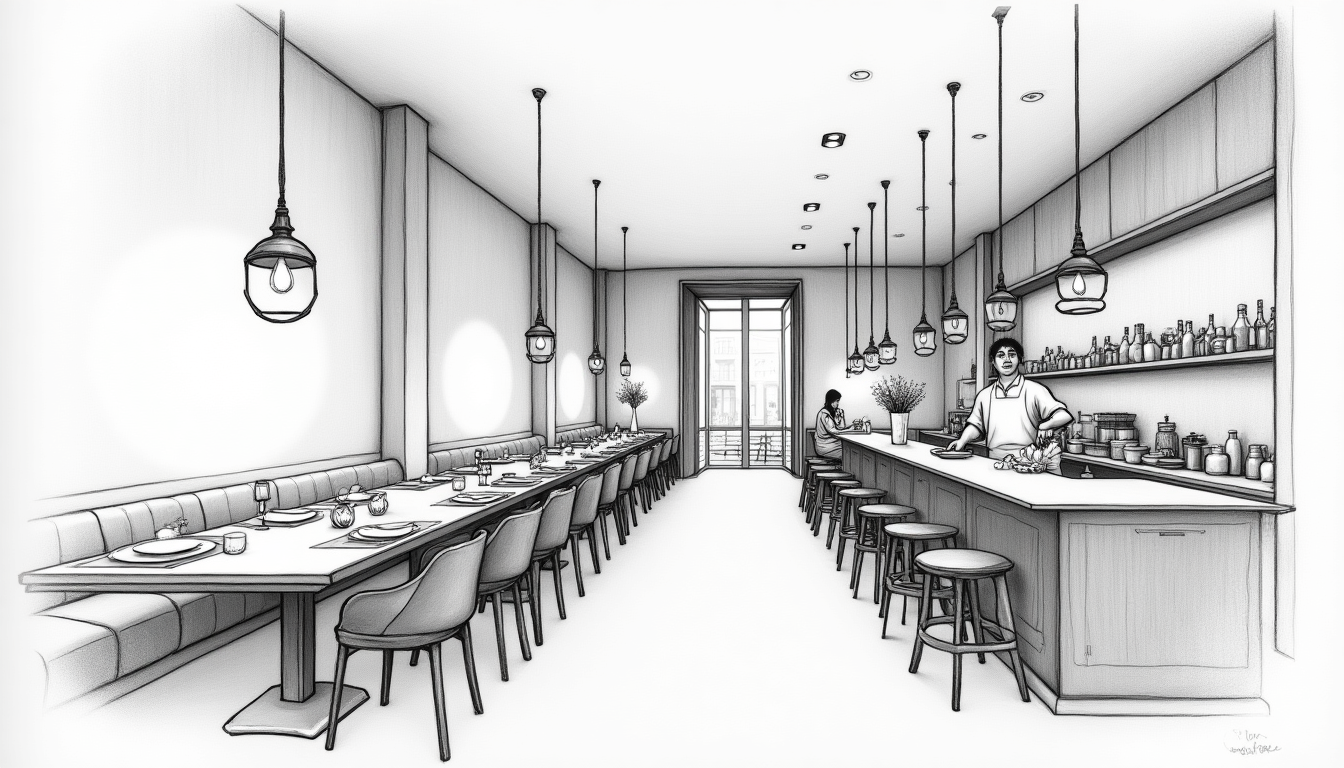
Naurephon “Billie” Wannajaro, the San Francisco operator behind hed verythai (2023) and hed11 (2024), is opening hed NYC at 461 W 23rd Street in Chelsea later this month, taking over the former Calle Dao space. hed11 in Japantown was added to the 2024 Michelin Guide as a Recommended entry. The room is a 24-seat Thai tasting menu built around local New York seasonal ingredients, with head chef Piriya “Saint” Boonprasan, who previously cooked at the Michelin-starred Saawaan in Bangkok. Wannajaro has been searching for a New York site since the summer of 2025, and the Chelsea debut is her first East Coast location. The opening reads as one new restaurant on its face, but the format choice and the cross-market move tell you something about where NYC fine dining and operator strategy are heading in the back half of 2026.
What 24 Seats and a Tasting Menu Mean Right Now
When an operator with Wannajaro’s profile picks 24 seats and a single tasting menu for her New York debut, the format is making a specific operating bet. Twenty-four seats means a small kitchen line, with the chef and one or two cooks running service across a tight footprint. A single tasting menu means one ticket fires through the kitchen at one cadence, instead of a dozen à la carte orders pacing themselves at different speeds across a 90-minute window. The model survives on regulars and reservations rather than on volume, and the cost stack maps to that operating shape from day one. A 60-seat full-service room is solving a fundamentally different problem than a 24-seat tasting room is, and the gap is widening as the cost line pushes harder.
The model is also one the team has been running in San Francisco for two years. hed11 in Japantown opened in April 2024, and the Boonprasan-Wannajaro pair has dialed in the Thai tasting-menu format on the Pacific side already. The Chelsea move ports a tested operating model into a new geography rather than a concept they are still working out. Most operators expanding cross-country sign a 10-year lease and bet on the buildout. Wannajaro is bringing a format the team has already proven.
The NYC Cost Backdrop
The reason the format choice matters is the cycle hed NYC is opening into. The New York State minimum wage moved to $17.00 per hour for NYC, Nassau, Suffolk, and Westchester effective January 1, 2026. The tipped food-service rate in the same counties is now an $11.35 cash wage plus a $5.65 tip credit through year-end. The New York State Restaurant Association’s Melissa Fleischut told reporters that “for many small businesses, there’s simply no more room to absorb increases.” The same coverage documented that rent inflation has remained the single biggest pressure point, particularly in Manhattan corridors where commercial leases have rebounded faster than foot traffic.
The National Restaurant Association’s 2026 State of the Industry release reported that 42 percent of operators said their restaurant was not profitable last year and 60 percent reported softer customer traffic, with more than nine in ten flagging food, labor, insurance, energy, and swipe fees as significant challenges. Total industry sales are projected at $1.55 trillion with modest 1.3 percent real growth. National restaurant M&A is reading the same conditions, with Capstone Partners reporting total sector deal volume down 28.9 percent year-over-year and strategic-buyer activity down 37.1 percent in their October 2025 update.
A 60-seat à la carte room that signed a 10-year lease in 2018 is fighting the new cost stack on its 2018 unit economics. A 24-seat tasting menu room being built cold in 2026 can design against the new stack from day one, and that gap is the operating content of the format choice.
The Cross-Country Signal
hed NYC is not opening alone, and the cohort moving toward small-format tasting menus in the same window is real and worth tracking. The Infatuation’s NYC spring 2026 openings guide flagged Kappo Sono as a 10-seat kaiseki concept relocating into One Bryant Park, Oyatte as a chef-driven seasonal tasting menu in Murray Hill from a veteran of The French Laundry, Atomix, and Geranium in Copenhagen, and Ugly Baby’s return as a Brooklyn Thai concept opening in May at 364 Grand Street. Sam Tell’s 2026 trends piece called the pattern directly, writing that “chef’s counters, small tasting menus, and fully open kitchens continue to take over” and that “diners want to see the fire, hear the sizzle, and watch the chefs at work.”
The way I read the cohort, this is not a passing fad. The NYC fine-dining tier and the regional-import tier are reaching for the same operating shape, defined by a small floor, a fixed menu, a light back-of-house, and premium per-cover. Wannajaro’s move from San Francisco fits a broader pattern of operators with proven small-format models porting them cross-country instead of trying to build the next 80-seat full-service brand.
What This Means for NYC Operators
Two takeaways are worth knowing for operators reading this cycle. First, the deal patterns we are seeing in the NYC market are favoring sellers with clean economics on a small, defendable footprint. The 24-seat operator with a tasting menu, a tested format, and 12 to 18 months of validated demand is a more attractive acquisition or partnership target right now than the 80-seat full-service room with a 12-year lease and a 28 percent labor line. Acquirer appetite is shifting toward formats that plug into a multi-unit platform without inheriting a heavy real estate stack, and the 24-seat box clears that bar. The Capstone data shows that activity has compressed at the volume level, and the deals that are getting done are skewing toward defensible operating shapes.
Second, if you are running an established mid-size NYC dining room and the math has been getting harder for two cycles running, the strategic value of your concept is highest right now to a multi-unit group or a strategic buyer who can amortize design, beverage, and back-office across multiple rooms. The single-location operator absorbing the full cost stack alone is the harder asset to clear, and the cost line is more likely to compress further than to ease before 2027. If this sounds like your situation, we’re here when you’re ready, no pressure, no timeline.
Sources
- Secret NYC, “New Restaurants & Bars Opening In NYC In May”
- What Now NYC, “Upcoming HED NYC Brings Michelin-Recognized Thai Tasting Menu to Chelsea”
- The Bold Italic, “‘Hed VeryThai’ review: Rare Isaan Thai platters hidden off a FiDi alley”
- Patch San Francisco, “5 Bay Area Restaurants Added To Michelin Guide” (July 2024)
- hed 11
- New York State Department of Labor, “Minimum Wage for Tipped Workers”
- Proskauer Law and the Workplace, “New York State Minimum Wage and Exempt Salary Updates for 2026”
- New York Wire, “NYC Restaurant Closures Reflect Economic Shifts Across the City”
- PR Newswire / National Restaurant Association, “Persistent Cost Increases and Enduring Demand Will Shape the Restaurant Industry in 2026”
- Capstone Partners, “Restaurant Market M&A Update – October 2025”
- The Infatuation NY, “NYC’s Most Exciting Spring Restaurant Openings”
- Sam Tell, “Restaurant Trends to Watch in 2026”
Businesses Mentioned
Tags