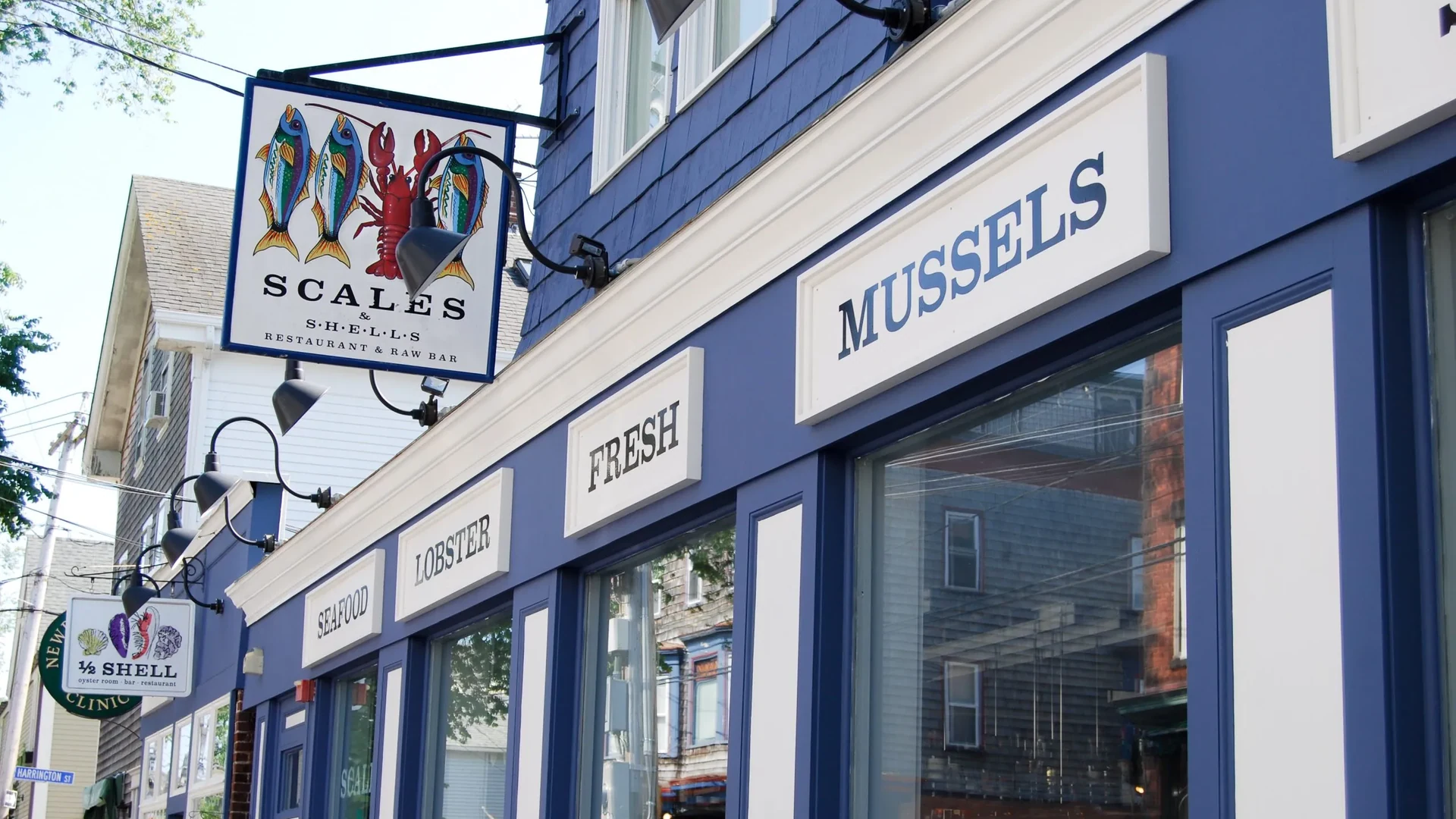
Heritage Group closed out 2025 by agreeing to acquire Scales & Shells, the Thames Street seafood house that Debra and Andy Ackerman opened in 1987 and ran for roughly 35 years. It was one of four Rhode Island restaurant deals the Newport company announced inside a few months, and it fit a pattern that has been building since the group launched. Heritage now operates around two dozen restaurants and two inns across the state, employs close to 1,100 people at the summer peak, and projects roughly $155 million in revenue for 2026. In a market where independent operators have spent three years absorbing higher costs, one well-capitalized buyer has become the most active acquirer of legacy restaurants in Rhode Island.
The Group Behind the Deals
The company rebranded from Heritage Restaurant Group to Heritage Group in December 2025, a nod to a portfolio that now runs past restaurants into inns, catering, food trucks, seafood distribution, and retail. Its founder and chief executive is Nicholas Schorsch, the former real estate investor behind AR Global, with his son Nicholas Schorsch Jr. serving as chief operating officer. The holdings amount to a tour of Rhode Island dining, with La Forge Casino Restaurant, Brick Alley Pub, Flo’s Clam Shack, Olneyville New York System, Anthony’s Seafood, Providence Coal Fired Pizza, Union Station Brewery, and the Vanderbilt hotel among them. Brick Alley Pub, one of the few deals with a public number, changed hands at a reported $9.75 million. Company leadership has said it wants to double that footprint within five years and expand to markets outside New England, and it frames the whole effort around preserving heritage restaurants and the community histories attached to them.
Succession Runs Through Every Deal
Look past the acquirer and most of these transactions are exits by owners at the end of a long run. Joann Carlson founded Jo’s American Bistro in 2013 and stepped back after more than 40 years in the restaurant business when Heritage took over and reopened the Memorial Boulevard room on January 22, 2026. Her head chef since 2014, her co-executive chef, and her general manager since 2013 all stayed. “Jo’s is still Jo’s,” Carlson said of the handoff. The Ackermans’ seafood house carried 35 years of history before it sold, and Heritage plans to reopen it as an elevated seafood concept after a renovation.
The same shape shows up at The Quencher on Long Wharf, where Scott and Adrienne Kirmil of Inked Restaurant Group agreed to sell in December and stayed on to run the transition, keeping their staff in place. “Knowing the staff is taken care of and that Ade and I can help with the transition made this the right move,” Scott Kirmil said. In February the group reached beyond Newport for Mews Tavern, a longtime Wakefield institution. The pitch to each seller was the same. Heritage keeps the name on the door and the existing team in place while the founder hands off on their own terms.
What the Rhode Island Numbers Say
The consolidation is happening against a hospitality economy holding steady under strain. The Rhode Island Hospitality Association projects $1.5 billion in restaurant sales for 2026 and counts leisure and hospitality at 12.2 percent of the state workforce. It also counted 23 hospitality businesses and nearly 600 sector jobs lost over the past year, with food, labor, rent, and insurance costs all climbing faster than revenue. Providence hotel occupancy rose 6 percent year over year in 2025, and statewide occupancy is expected to stay flat in 2026 with modest gains in room rates. The near-term catalyst is the FIFA World Cup at Gillette Stadium, projected to draw 892,000 visitors and $331 million in Rhode Island spending.
That combination of real demand and real cost pressure is the environment where a buyer with capital and operating scale can move on businesses that individual owners are finding harder to carry alone. A group that already buys seafood through its own distributor, staffs across two dozen kitchens, and books rooms at two inns absorbs a cost base that would flatten a single-location operator. The pressure that pushes a 40-year owner toward the exit is the same pressure that makes the business worth more inside a portfolio than outside one.
A Buyer Who Keeps the Name on the Door
For a retirement-age operator, the Heritage pattern is the exit a lot of owners say they want and rarely get, a sale that keeps the name, the staff, and often the seller through the handoff. That is the practical difference between a strategic buyer assembling a portfolio and a financial buyer stripping one for parts, and it is why multi-unit and group sales increasingly set the comps for single-location deals in a market like this. The same succession wave is moving through New England more broadly, showing up in Boston’s coming decade of ownership transitions and the wave of restaurant M&A across the region earlier this year.
What an owner needs before entertaining any offer is a clear number. A current restaurant appraisal puts the real estate, the lease, the license, and the earnings into one figure, which is the only way to judge whether a buyer’s offer reflects what the business is actually worth. Whether the goal is selling the restaurant outright or fielding interest from a group that wants to keep it running, that number is where the conversation starts. Operators in Rhode Island and across New England weighing an exit this cycle can open a confidential conversation whenever the timing is right.
Sources
- What’s Up Newp, “Heritage Group reports record growth, eyes expansion beyond New England”
- What’s Up Newp, “Heritage Restaurant Group to acquire Scales & Shells”
- What’s Up Newp, “Jo’s American Bistro reopens under new ownership as Heritage Restaurant Group completes acquisition”
- What’s Up Newp, “Heritage Group reaches agreement to acquire The Quencher, staff to remain”
- The Providence Journal, “Audrain owners acquire another Newport restaurant”
- Rhode Island Hospitality Association, “Industry Outlook 2026: Balancing Resilience and Caution”
Tags