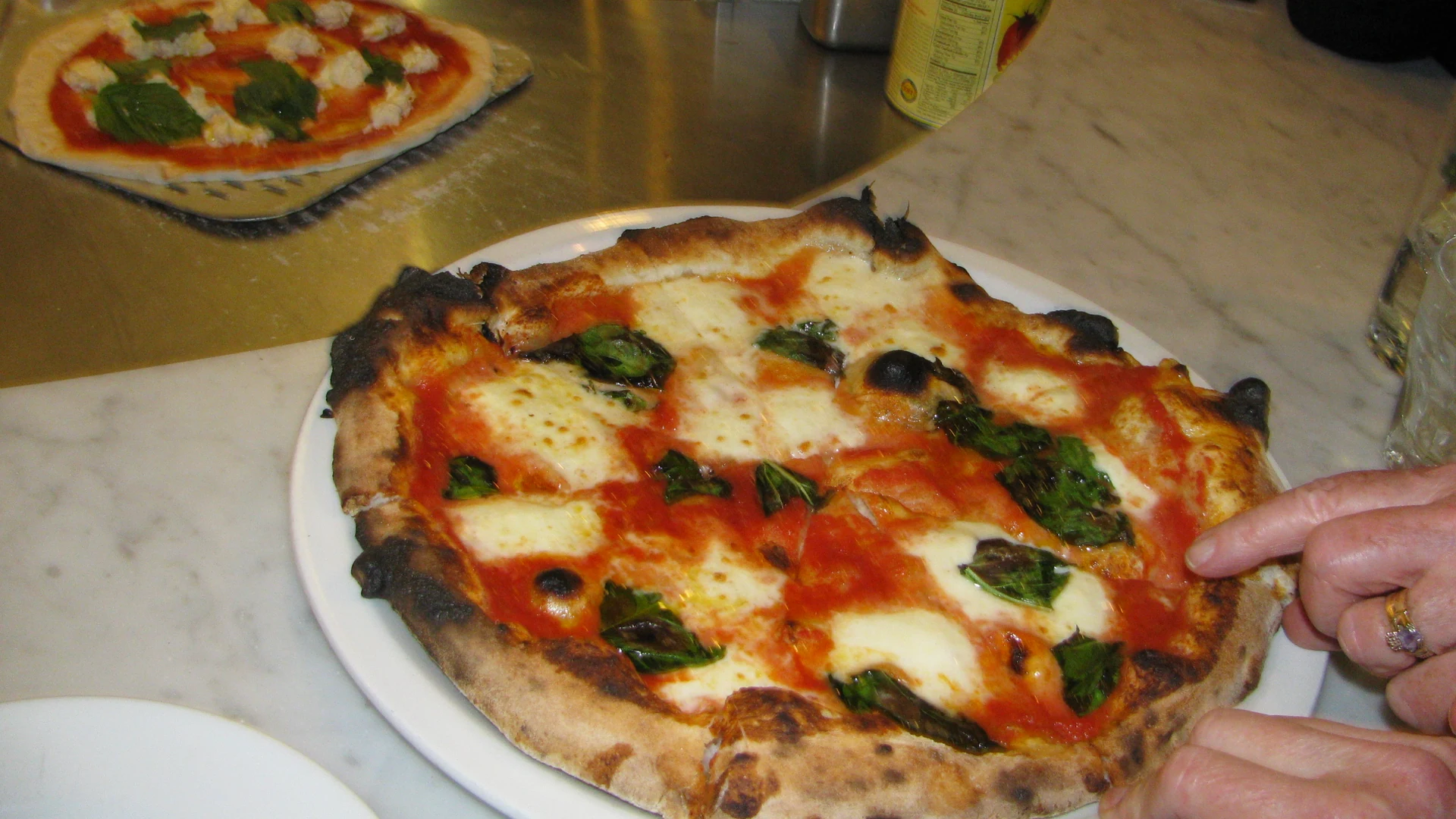
A 145-seat fine-dining pizzeria at 10 NE 27th Street opened in Wynwood on January 16 with a $200 tasting menu, a glass-enclosed wine cellar as the centerpiece of the room, and imported Italian ovens behind an open kitchen. The chef is Francesco Martucci, whose pizzeria I Masanielli in Caserta was ranked the number one pizzeria in the world by 50 Top Pizza for 2025, and who took home World’s Best Pizza Chef the same year. The operator partner is Liberty Entertainment Group, a Toronto-based hospitality firm with roughly 1,500 employees across more than 600,000 square feet of brick-and-mortar properties, including the Michelin-starred Don Alfonso 1890, plus DaNico, Casa Loma, and a roster of multi-unit dining concepts. Five months in, the restaurant debuted at number five on the 50 Top Pizza USA 2026 list and number one in Miami.
The Wynwood Fine-Dining Comp Just Moved
A 145-seat restaurant charging $200 per cover in Wynwood does two things to the local comparable set. It tells landlords on 27th Street and the surrounding blocks that there is a tenant pool willing to sign at premium rents for a polished build. And it tells operators thinking about a sale or a refinance in 2026 that the high-end ceiling for the neighborhood is materially higher than what trailing comps would suggest.
For a Miami operator running a mid-tier concept in Wynwood, the implication is straightforward. The valuation conversation around your business depends in part on what a sophisticated buyer thinks the location can support. A $200 tasting-menu restaurant operating in the same corridor is a piece of evidence in that conversation. Whether your concept is the one a buyer like Liberty would underwrite or the one they would replace is a separate question, but the ceiling moved.
The Chef-IP Plus Operator Structure Is The Real Story
Martucci spent years declining international offers before agreeing to open his first U.S. restaurant in Miami. The deal he eventually signed paired his name and his recipe book with an operator that had built fine-dining-and-events infrastructure across nearly forty years in Toronto. Liberty supplies the lease, the buildout capital, the operating systems, the wine program, and the platform to absorb a 145-seat opening in a U.S. market where they had never operated before. Martucci supplies the brand, the menu, and the credibility that lets the room price at $200.
For a U.S. operator with a strong concept and limited capital, this is the relevant deal structure to understand. A founder with a defensible brand can grow by adding their own units one at a time, or they can partner with a hospitality platform that brings the multi-unit infrastructure and the balance sheet. The choice carries meaningful tax, control, and equity-economics consequences that any operator weighing it should walk through with their CPA and attorney before signing anything. The trend over the last several years has been more deals of the second kind, and the Martucci-Liberty partnership is a premium-tier version of the pattern.
For operators sitting on a single-unit concept with credible upside, the decision is which side of the table you want to be on at sale. Selling to a strategic operator with a multi-unit playbook nearly always nets more than selling to a financial buyer alone, but only if the brand is differentiated enough to be worth platforming.
Liberty’s Stated Pipeline Points to the Next Market
Nick Di Donato, Liberty’s president and CEO, said the firm is “being thoughtful and selective about growth, focusing on cities that share cultural similarities with Toronto,” and named Chicago as the next likely market. That is a useful data point for operators in coastal markets, because Liberty’s stated pattern (luxury hospitality, multi-unit, Michelin-tier kitchens, event-and-restaurant combinations) maps onto Boston, New York, and the California coast as well.
When a foreign operator with a Michelin track record signals a multi-city U.S. expansion, the most likely partners or acquisition targets in the next two to three years are local operators with a defensible concept and a clean balance sheet. The conversation starts with brokers who know the local operator pool and the local lease comps. Operators in Boston, New York, and Miami in particular should know who Liberty is well before the firm shows up looking at sites.
Mixed Local Reviews And The Year-Two Question
Local critics have not been uniformly kind to the room since opening. The Infatuation rated it 6.7 out of 10 in March, writing that the in-room claim of “number one pizzeria in the world” is “an impossibly large claim that’s just not true.” The Adventurist gave it three stars in February and described the signature Pizza a Due as “an overconfident stunt.” The 50 Top Pizza ranking and the mixed local reviews are both real, and they coexist.
On the operator side, valuation turns on the durability of the average check at year two. A 145-seat dining room running a $200 tasting menu at any reasonable utilization rate produces meaningful top-line. Whether the room can hold that utilization once the opening curiosity fades is what any buyer or lender will underwrite twelve to twenty-four months out. Operators in our markets running comparable high-ticket concepts should treat the year-two number as the one their own valuation hinges on.
The Miami Comp Just Got Deeper
The 50 Top Pizza USA top tier carries three Miami pizzerias this year. Martucci sits at five, La Leggenda by Giovanni Gagliardi at eleven, and ‘O Munaciello by Carmine Candito also at eleven. That is a market that is genuinely deep in elevated Italian, and the buyer pool for an elevated-Italian Miami sale got more sophisticated this spring.
For Miami or South Florida operators thinking about an exit window in the next twelve to twenty-four months, the practical implication is that the buyer landscape has more strategic operators in it than it did a year ago. Liberty entered the market with one credentialed bet, and the success of that bet will pull other multi-market hospitality firms into the same evaluation. The right time to begin a confidential conversation about valuation and buyer fit is before the next entrant decides which corner of Wynwood they want.
A $200-per-cover pizzeria opening in Wynwood gets covered as a chef story. The operator story sits with the restaurant next door that has been waiting for the right window to sell.
Sources
- Miami New Times, “World’s Best Pizzeria Is Opening First U.S. Location in Miami”
- Time Out Miami, “The world’s best modern pizzaiolo is opening a new restaurant in Miami” (January 2026)
- BriefGlance, “The Dough Rises: How Martucci’s Fine-Dining Pizza Conquered Miami’s Market”
- Nation’s Restaurant News, “Italy’s acclaimed pizzaiolo Francesco Martucci just opened his first U.S. restaurant in Miami”
- 50 Top Pizza, “50 Top Pizza USA 2026: Una Pizza Napoletana in New York is the Best Pizzeria in the USA for 2026”
- The Infatuation, “Francesco Martucci is a victim of its own impossible expectations” (March 4, 2026)
- The Adventurist Magazine, “Review: Francesco Martucci Miami’s World-Famous Pizza is Overhyped” (February 2, 2026)
- VeraVita Magazine, “Nick Di Donato: Hospitality Excellence with Liberty Entertainment Group” (July 2, 2025)
Businesses Mentioned
Tags