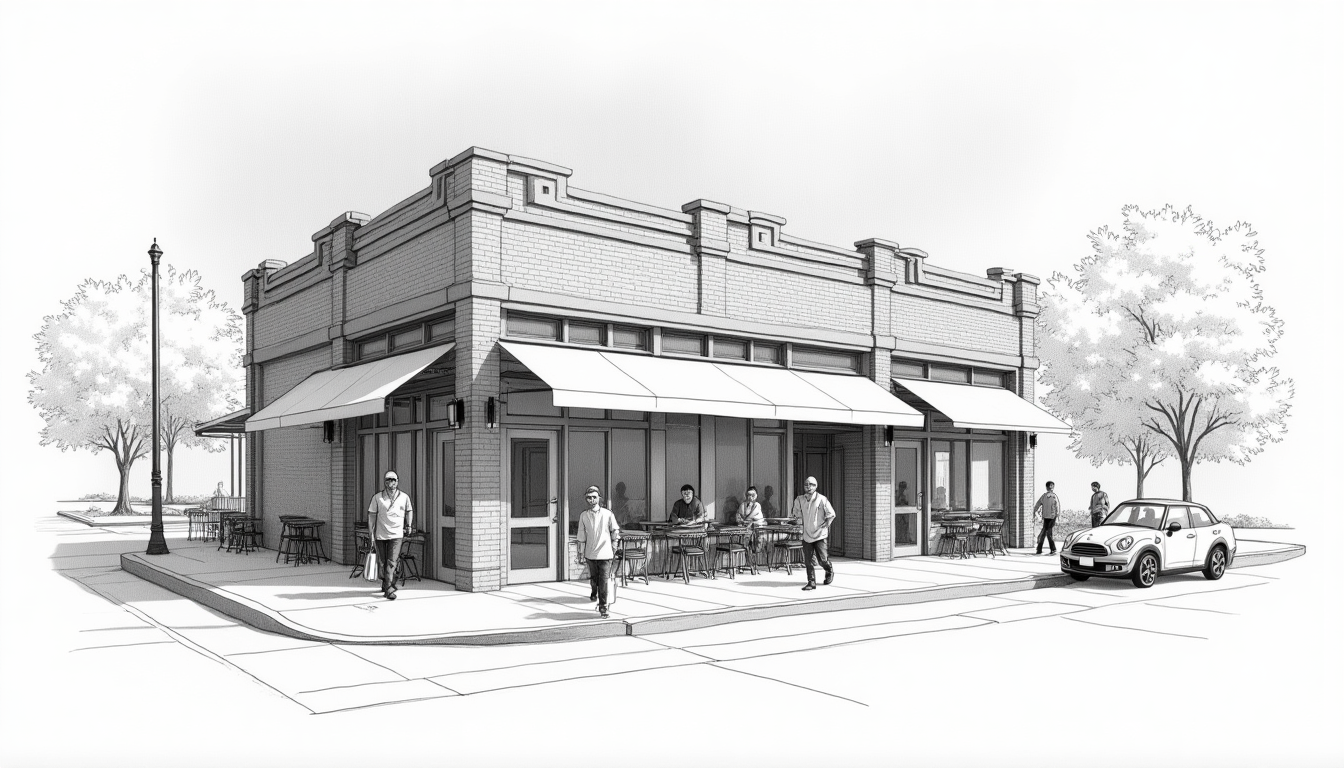
Juan Correa intentionally closed Llama Inn at 50 Withers Street in Williamsburg at the end of 2025, after a 10-year run that earned the Peruvian room national recognition and outposts in Madrid and London. He reopened the same address on Wednesday, May 13 as Café Bar J.F., a South American tavern built with executive chef Francisco Castillo around the tavern cultures of Peru, Chile, and Argentina. When Eater asked about the closure, Correa explained it in plain terms. “The world is not interested in something that’s been around for 10 years.” His other active concept, Papa San in Hudson Yards, opened in 2025 and continues to operate alongside the new Williamsburg room.
A concept change at one Brooklyn address is a Williamsburg story on its face. The operator psychology Correa described, the deliberate decision to close a successful 10-year room at the top of its lifecycle and recycle the address into a new concept, matters for every multi-room operator running a portfolio across the markets we cover.
Closing at Year Ten on Purpose
“The world is not interested in something that’s been around for 10 years.” That is a sentence very few operators with a working 10-year room are willing to say out loud, and almost no operator is willing to act on. The default lifecycle for a successful independent concept runs longer. The room opens, finds its audience, hits its operating peak, runs at peak for a five to seven year stretch, drifts into a familiarity curve, and slides out the back end of relevance over another five to ten. By the time the operator decides to close, the room is no longer earning what the address could earn, and the brand equity available at peak has dissipated into a tired version of itself.
Correa shortened that arc on purpose by closing the Williamsburg room at the top of the curve, with the brand still strong enough that Llama Inn outposts in Madrid and London can continue trading on it. The address, the staff trained inside it, and the operator’s own attention all redeployed into a new concept Castillo is co-leading. The capital that would have been bound up in defending the back half of the Llama Inn lifecycle is now compounding inside Café Bar J.F. on day one.
Address as Asset, Concept as Inventory
The Williamsburg corner at 50 Withers Street is the durable thing in Correa’s portfolio. The neighborhood foot traffic, the lease structure, the kitchen build-out, the liquor license, and the operator’s relationships with delivery vendors, food media, and the dining audience that came up around Llama Inn all live at the address. The concept on top of the address is what the operator controls and what gets replaced when the cycle calls for it. Treating the address as the asset and the concept as the inventory is a discipline most independent operators do not practice, because the brand a successful operator builds around a single room usually becomes inseparable from that room in the operator’s own mind.
Correa is signaling with this concept change that the discipline can be practiced. Llama Inn the brand continues in Madrid and London, while Llama Inn the Williamsburg room ended on a schedule the operator chose. The same address now houses a concept built for the next 10-year window, with a chef partner who shares the South American framing and broadens the cuisine surface from Peruvian-specific to pan-South American. The room is positioned for a fresh decade of relevance instead of defending the back half of the last one.
Multi-Concept Operators Across the Markets
The Correa playbook is not portable to every operator, but the question behind it is. Every multi-room operator across the markets we cover, from the SoCal coastal corridor and South Beach Miami to the Seaport in Boston and the Williamsburg, West Village, and Upper East Side rooms in Manhattan and Brooklyn, has at least one concept inside the portfolio that is past the operating peak. The harder question is whether the operator is willing to close that room at the top of the curve, the way Correa just did, or whether the portfolio defaults to defending it into the back half of the lifecycle.
The strategic value of the concept-recycle move is sharpest when three conditions hold. The address has to be the durable thing, with a lease structure or owned real estate that justifies a 10-year forward bet. The operator has to have a chef partner or internal team strong enough to build the next concept at the same address. And the brand equity from the closed concept has to be portable to another room or another market, so the existing brand is not destroyed when the room closes. For Correa, the lease at 50 Withers Street is the address asset, Castillo is the chef partner, and the Llama Inn name still trades in Madrid and London, which puts all three conditions in line for the recycle move.
For multi-room operators in the markets we cover who are sitting on a portfolio with one or two concepts past their peak, the question Correa is implicitly asking is worth running every year. If a concept-lifecycle conversation maps to your portfolio and you want to test whether one of the rooms in it is holding the slot that should host your next first-best, we’re here when you’re ready, no pressure, no timeline.
Sources
- Crain’s New York Business, “Llama Inn owner opens Peruvian tavern in same Williamsburg spot” (2026-05-12)
- Resy, “Brooklyn’s Cafe Bar J.F. Is a Third Space Devoted to South America’s Taverns” (2026-05)
- Greenpointers, “South American Tavern, Café Bar J.F., to Open This Spring in Former Home of Llama Inn” (2026-04-17)
- What Now New York, “Cafe Bar J.F. Opens in Williamsburg”
- The Infatuation, “Café Bar J.F. Review”
Businesses Mentioned
Tags