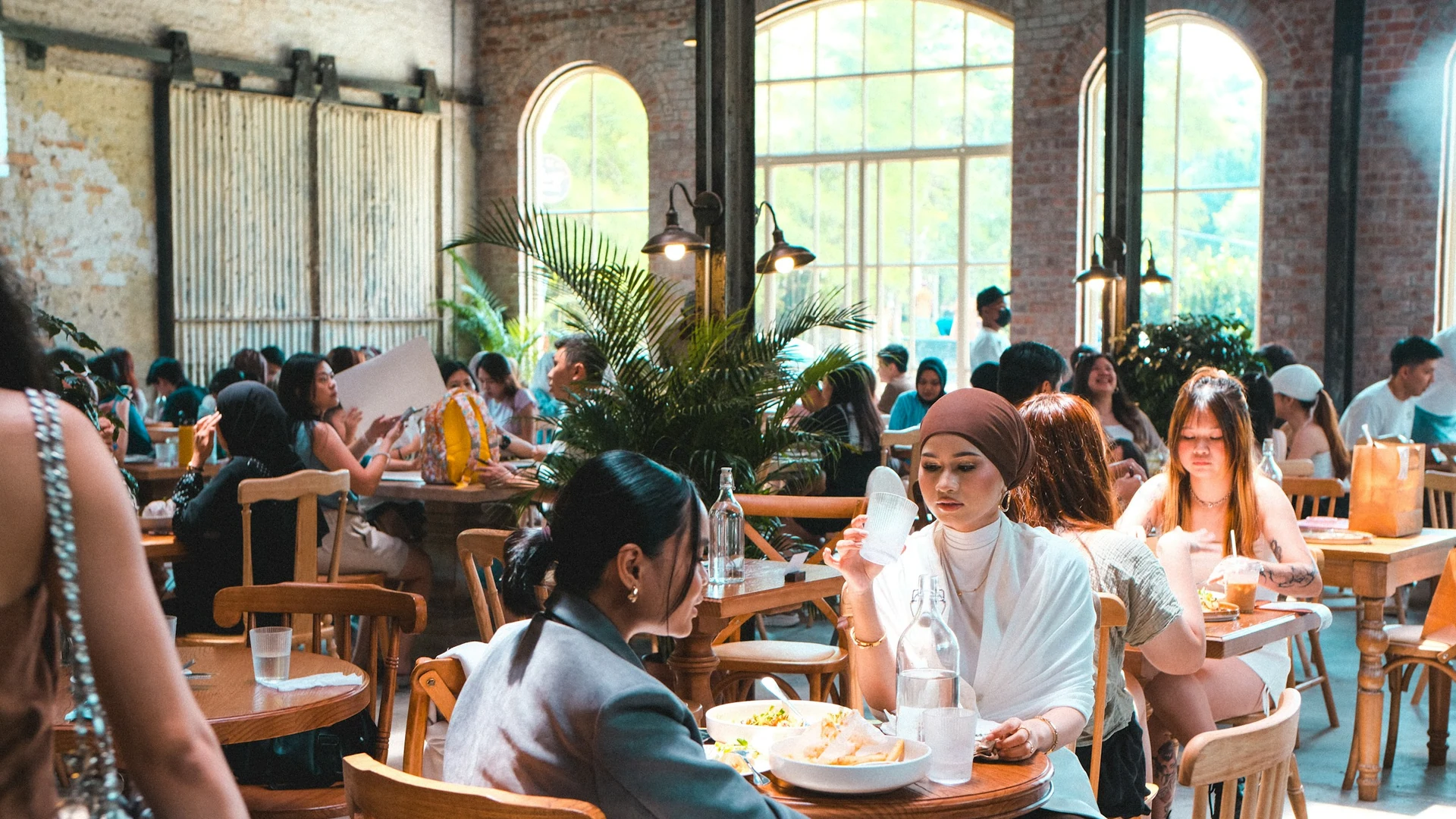
JPMorgan Chase moved its full workforce back to the office five days a week in March, and the bank marked the shift by opening The Exchange, a 19-station food hall built with Danny Meyer’s Union Square Hospitality Group inside its new 60-story headquarters at 270 Park Avenue. The tower holds roughly 14,000 employees, and the company built a restaurant floor rather than a cafeteria to greet them. That is a wager on foot traffic, and it is the clearest example of a pattern showing up across office districts nationwide, where the return of weekday workers is rebuilding the daypart demand that carries downtown restaurants.
Downtown Attendance Reaches Post-Pandemic Highs
Downtown Denver recorded a 74 percent weekday return-to-office rate in March, the highest reading since the pandemic and up from a 64 percent average across 2025, according to the Downtown Denver Partnership. Eighteen new ground-floor businesses have opened in the district since the start of the year, and food and beverage concepts account for 75 percent of them. Miami tells a similar story, where office leasing jumped nearly 45 percent year over year in the second quarter to 1.3 million square feet as availability fell to 14.9 percent, per Commercial Observer, and downtown Manhattan posted its strongest leasing year since 2019. The workers filling those buildings eat where they work, and operators are signing leases to be in front of them.
The New York Power Lunch Comes Back
Manhattan’s business-district dining rooms show the recovery most plainly. The Union Square Partnership counted 13 restaurant leases signed in a nine-month stretch, double the total over the same period a year earlier, as operators moved to claim storefronts around one of the city’s densest office corridors. The area near Grand Central has drawn a comparable rush, pulled by the financial firms that tightened their in-office requirements. Capital Grille relocated into the MetLife building, the seafood house Point Seven opened in the same tower, and chef David Burke opened Park Avenue Kitchen a few blocks away. The midday reservation book, thin for much of the past five years, is filling again at rooms like Le Bernardin, The Grill, Torrisi, and Raf’s, where Robb Report tracked the expense-account lunch drawing a crowd it had lost.
How Office Traffic Prices Into a Sale
For a broker valuing a restaurant, the return of office workers changes the arithmetic on a business-district location. A lunch service that runs five days a week instead of two or three lifts covers, check frequency, and the revenue a buyer is willing to underwrite, and it gives a landlord more confidence in the rent an incoming operator can carry. A current restaurant appraisal puts that corridor traffic, the lease, and the license into a single number an owner can work from. The gap between a room that captures steady weekday trade and one that leans on evenings and weekends is the distinction that sets a multiple, and it is widening again as attendance climbs.
Operators positioned near the corridors drawing workers back are the ones whose numbers a buyer reads with the least discount. Those corridors run through the financial districts of Manhattan and Boston, Brickell in Miami, and the office cores of Southern California, and the effect reaches the independent operator two blocks from a tower like 270 Park as surely as it reaches the food hall inside it. A buyer scouting for a location tied to returning office traffic has a clearer signal to act on than at any point since 2019, and the operator holding one of those rooms has a stronger story to bring to the table. Securing the right business-district space is where much of that demand is being claimed right now, lease by lease.
The demand shows up on both sides of a transaction. An owner weighing an exit in a business district can point a buyer to a daypart that is filling rather than fading, and the sale process starts from a firmer footing because of it. The same tailwind that fills JPMorgan’s food hall also moves the sale price of an independent restaurant nearby. It sits alongside the tourism and hotel spending that feeds the same rooms, a demand base traced in New York City hotels leading the nation on occupancy, and together they describe a downtown restaurant economy with more weekday footing under it than it has had in years.
Owners and buyers watching the return-to-office trend play out in the corridors Corbett covers can open a confidential conversation whenever the timing is right. There is no obligation and no pressure on the calendar, only a clear picture of what a returning weekday crowd is worth to a specific room.
Sources
- Entrepreneur, “JPMorgan’s New ‘Supertall’ Office Offers Perks Like High-End Restaurants and a High-Tech Gym”
- Downtown Denver Partnership, “March 2026 High Frequency Update”
- Commercial Observer, “Miami’s Office Leasing Jumps Nearly 45% in Q2”
- THE CITY, “Restaurant Resurgence Reflects Optimism Post-Pandemic Demand Is Here to Stay”
- Robb Report, “The New York City Power Lunch Has Returned”
Tags