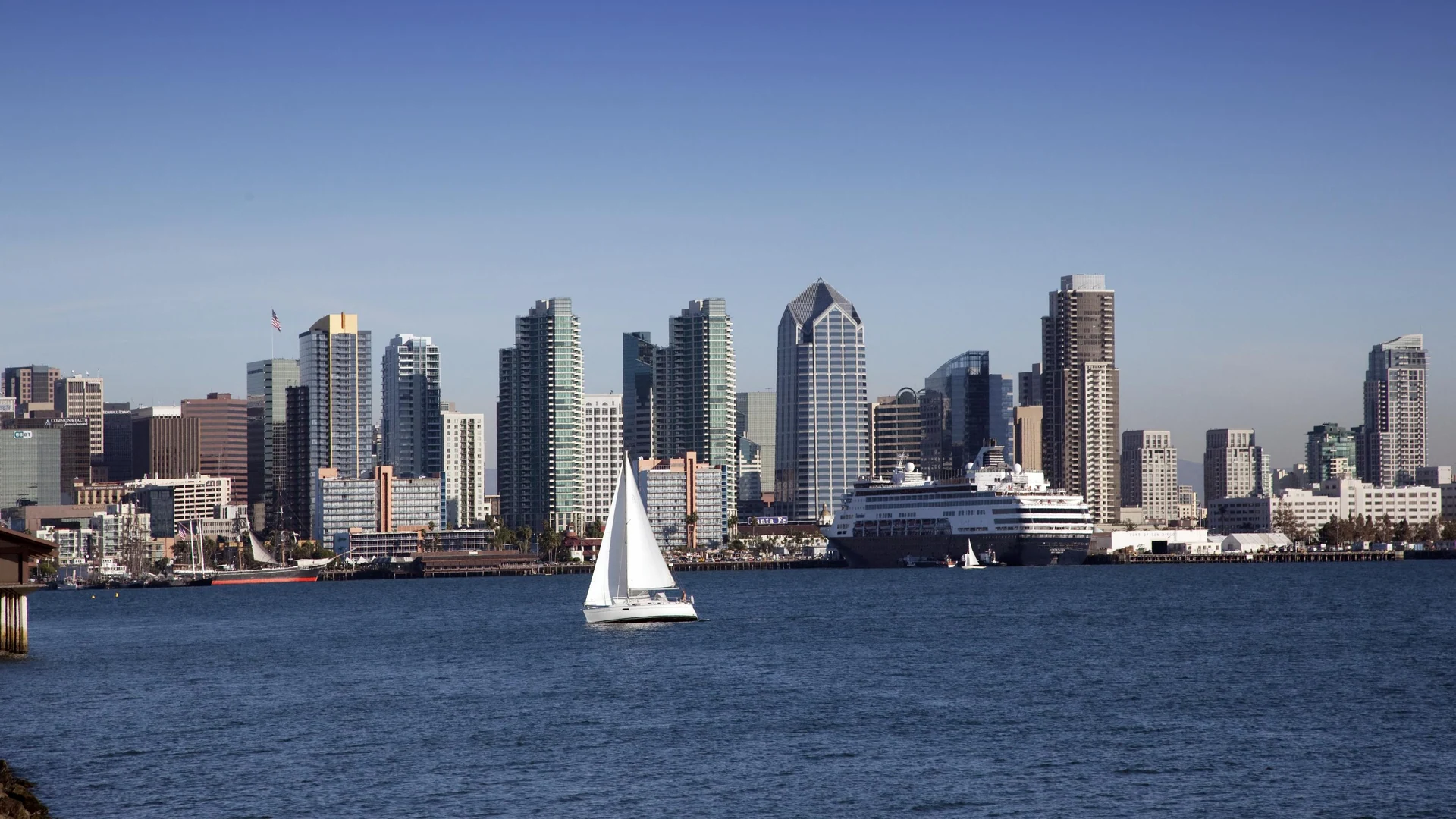
A new wage floor takes effect across San Diego on July 1, 2026, and for restaurant operators in the market it reaches well beyond the hotel front desk. The Hospitality Minimum Wage Ordinance sets $19 an hour for large hotels and amusement parks and $21.06 for major event centers, climbing on a fixed schedule to $25 by 2030 before annual inflation adjustments. The San Diego City Council adopted it in September 2025. For Corbett’s California operators, the schedule and its reach belong in any 2026 sale conversation.
Who Falls Under the Ordinance
The wage floor applies to privately owned hotels with at least 150 guest rooms, roughly 103 properties citywide. Smaller hotels under that threshold are exempt, the single carve-out in the law. The ordinance also covers amusement parks of at least 75 contiguous acres, a definition that captures SeaWorld San Diego, along with a named set of event centers that includes Petco Park, the San Diego Convention Center, Pechanga Arena San Diego, and the Civic Theatre. Event center workers start at the higher $21.06 rate.
Everyone outside that footprint stays on the citywide minimum wage of $17.75, effective January 1, 2026. A line cook inside a covered hotel and a line cook at an independent restaurant down the block now work under two separate wage floors, and the spread between them grows every July through 2030.
The Part That Reaches Restaurants
Coverage does not end with hotel and park staff. The ordinance pulls in restaurants operating inside covered hotels, down to the servers, cooks, and dishwashers, and it covers any business that leases space from a covered employer. A restaurant renting a room inside a 150-room hotel runs under the wage floor even though it keeps its own books and signs its own checks. Contracted services count too, so an operator cannot sidestep the rule by outsourcing the kitchen or the cleaning crew to an outside vendor.
The event center provisions go further, covering all restaurants, bars, retail shops, and parking operations on the grounds of the named venues. A concession operator inside Petco Park and a catering company working the Convention Center floor both sit on the $21.06 wage as of opening day.
What It Changes for a Sale
Two restaurants can post the same revenue, run the same menu, and staff the same number of shifts, and still carry very different cost structures depending on one detail. One leases space inside a covered hotel near the bayfront. The other operates from its own four walls a few blocks inland. As of July 1, the first runs hourly labor at $19 and the second at $17.75, and by 2030 the first reaches $25 while the second follows a slower citywide track. That spread runs straight through the profit line, and in a sale it runs straight through the valuation.
Restaurants sell on seller’s discretionary earnings, the cash the business actually puts in an owner’s pocket. A wage floor that steps up on a published schedule through 2030 lowers SDE for any covered operation against an otherwise identical one outside the footprint. A buyer underwriting a hotel-leased restaurant or a venue concession has to build in labor that rises about a dollar fifty a year for four straight years, whatever sales do. Two businesses that looked like comparable listings on a revenue multiple stop being comparable once the wage schedule is in the model.
Lease terms signed before the ordinance sharpen the problem. An operator locked into fixed rent inside a covered hotel now carries a climbing labor cost with no give on the other side, and percentage-rent deals do not flex quickly enough to cover a four-year ramp. For anyone signing a fresh lease tied to a covered hotel or venue, the wage schedule belongs in the underwriting before the deal closes.
Room Rates Carry the Increase
Hotels rarely swallow a structural labor increase without a response. Payroll is the largest controllable cost in a full-service property, and a floor moving from $19 to $25 over four years pushes operators toward higher room rates, leaner staffing, or some of both. San Diego already carries one of the higher average daily rates in California, and a rising labor base gives operators another reason to push it higher. A pricier room makes the city a pricier destination, and that cost circles back to restaurant demand when visitors arrive with less to spend at the table.
Operators whose traffic leans on tourism, downtown, around the Convention Center, and along the bay, feel the ordinance from two sides at once. Their own labor costs rise inside the covered footprint while the visitors those venues draw carry a thinner discretionary budget after the room is paid for.
For Operators Sizing a 2026 Exit
For any operator with a restaurant, bar, or concession tied to a covered San Diego hotel, event center, or amusement park, July 1 marks a reset of the cost basis that keeps climbing through 2030, not a one-time adjustment. For a seller, that reshapes what the business is worth and how a buyer will model it. For a buyer, it is a cost to price into the offer up front. Operators outside the footprint, independents on the citywide minimum, pick up a relative cost edge they did not hold a year ago.
The conversation worth having now is what a structured exit looks like once the wage schedule is built into the numbers, and which buyer profile fits your specific footprint. We are glad to have that confidential conversation when you are ready.
Sources
- City of San Diego, Hospitality Minimum Wage Ordinance
- Times of San Diego, “Council OKs minimum wage of $25 for some hospitality workers, despite opposition” (September 16, 2025)
- Hotel Dive, “San Diego passes $25 tourism minimum wage with carve-out for small hotels”
- Constangy, “San Diego Minimum Wage Updates for 2026”
- HRWatchdog (CalChamber), “City of San Diego Raises Wages for Certain Hospitality Employees”
Businesses Mentioned
Tags