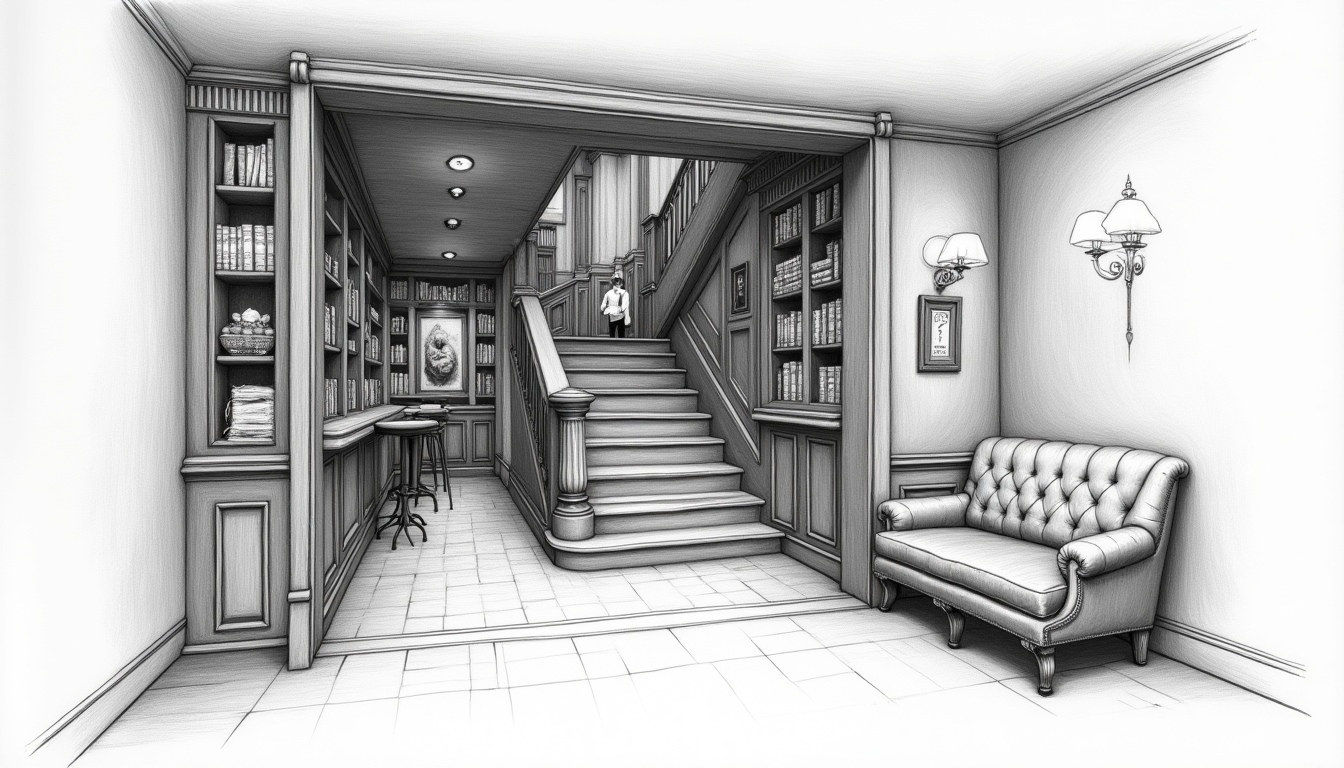
COJE Management Group, the Boston firm founded by Chris Jamison and Mark Malatesta and behind Yvonne’s, Mariel, Lolita, Ruka, Caveau, My Girl, Coquette, and mrhchinese, has opened The Zebra Room at 3 Winter Place in Downtown Crossing. The new room is a tiny subterranean steakhouse accessed through Yvonne’s Library bar via a hidden bookshelf door, with a menu of steaks, seafood, rack of lamb, pork chops, martinis, and wines. What makes the opening worth reading is the pattern, because this is the third hidden-format concept COJE has opened in three years, and the operating logic behind that pattern says something about how Boston cost structures are reshaping who’s expanding and how.
The Vertical Stacking Pattern
The Zebra Room is COJE’s second vertical-stacking opening in 18 months. In December 2025 the group opened My Girl, a Havana-inspired cocktail lounge, directly below Mariel at 10 Post Office Square, sharing the same building with a separate concept, a separate door, a separate target customer, and shared back-of-house economics. The Zebra Room follows the same operating playbook, a distinct concept tucked into space that was already controlled, accessed through Yvonne’s, but running as its own restaurant brand.
Caveau, COJE’s hidden cocktail destination at 1 Center Plaza near Government Center, opened in May 2023 and proved the small-format hidden-door concept works in Boston. The Zebra Room is the third concept in three years built on similar operating logic, and the second built specifically on the vertical-stacking model.
How the Math Works Per Square Foot
Jamison and Malatesta have built a portfolio of nine concepts over more than a decade. The pattern they are running is materially different from a typical multi-unit expansion. The group is squeezing additional concepts into space they already lease, with kitchens already staffed and a customer flow already trained to come downtown.
For a single-location operator looking at the same cost line items, the read is uncomfortable. Boston’s full-service labor and lease pressure has been forcing closures across mature operators for two cycles running. The competitive response from a group like COJE is to amortize the lease and the back-of-house against multiple concepts pulling distinct revenue streams from the same building, rather than absorbing all of that pressure inside a single concept. That is a different operating model than a single-location independent can run, and it is a meaningful part of why consolidated multi-concept groups are gaining share against independents in markets like Boston.
The Downtown Crossing Context
The Zebra Room sits in a neighborhood whose recovery story is finally tilting positive. Downtown Boston office vacancy fell for the sixth consecutive quarter in Q4 2025, down from a pandemic-era peak of 28.5% to 25.2%, with office-to-residential conversions driving the recovery. The customer base inside that footprint is shifting from peak-weekday office workers to a denser mix of residents, hotel guests, and evening visitors, which is exactly the demand profile that supports a small-format hidden-door concept rather than a 200-cover steakhouse.
The Boston steakhouse landscape is mature and saturated at the standard format. Mooo, Capital Grille, Davio’s, Smith & Wollensky, Grill 23, and Abe & Louie’s all operate in downtown Boston at the conventional 150-to-300-cover footprint. The Zebra Room is competing on different terms entirely, a tiny hidden room with no street-level signage, betting on scarcity and the same Yvonne’s customer who is already comfortable spending in this corridor.
What This Means for Boston Operators
We track these patterns across Corbett’s four markets, including California coastal, Boston and New England, New York City, and Miami, and the New England version is moving fastest right now. The operators expanding are doing it through stacking inside space they already control. The cost structure that is compressing single-location independents is the same cost structure that makes the stacking model attractive to groups with brand equity, kitchen scale, and a lease they are already paying.
For owner-operators in Boston full-service, the COJE pattern is one of the clearest signals in the market. If you’re running a single-location concept that has been holding the line on margins through cost discipline alone, the strategic value of your business may be highest right now to a group looking for a stacking opportunity in your corridor. The exit math for an independent operator is increasingly tied to whether the building they hold and the operating relationships they have built fit a multi-concept group’s expansion plan.
If the COJE pattern is showing up in your corridor and you’re starting to wonder what a strategic exit conversation looks like for a single-location concept, the timing question is worth thinking through carefully. We’re here when you’re ready to talk through what your situation looks like, no pressure, no timeline.
Sources
Boston Restaurant Talk, The Zebra Room Opens Below Yvonne's in Boston's Downtown Crossing
NBC Boston, Underground Steakhouse Accessed Only Through Hidden Bookshelf Door Opens in Boston
Boston Globe, My Girl Softly Opens Beneath Mariel
Boston Magazine, How COJE Restaurants Put the Sizzle Back into Boston Dining
Boston Magazine, Caveau Opens in Boston
COJE Management Group, Our Concepts
Boston Real Estate Times, Downtown Boston Records Fastest Office Market Recovery in Region
Businesses Mentioned
Tags