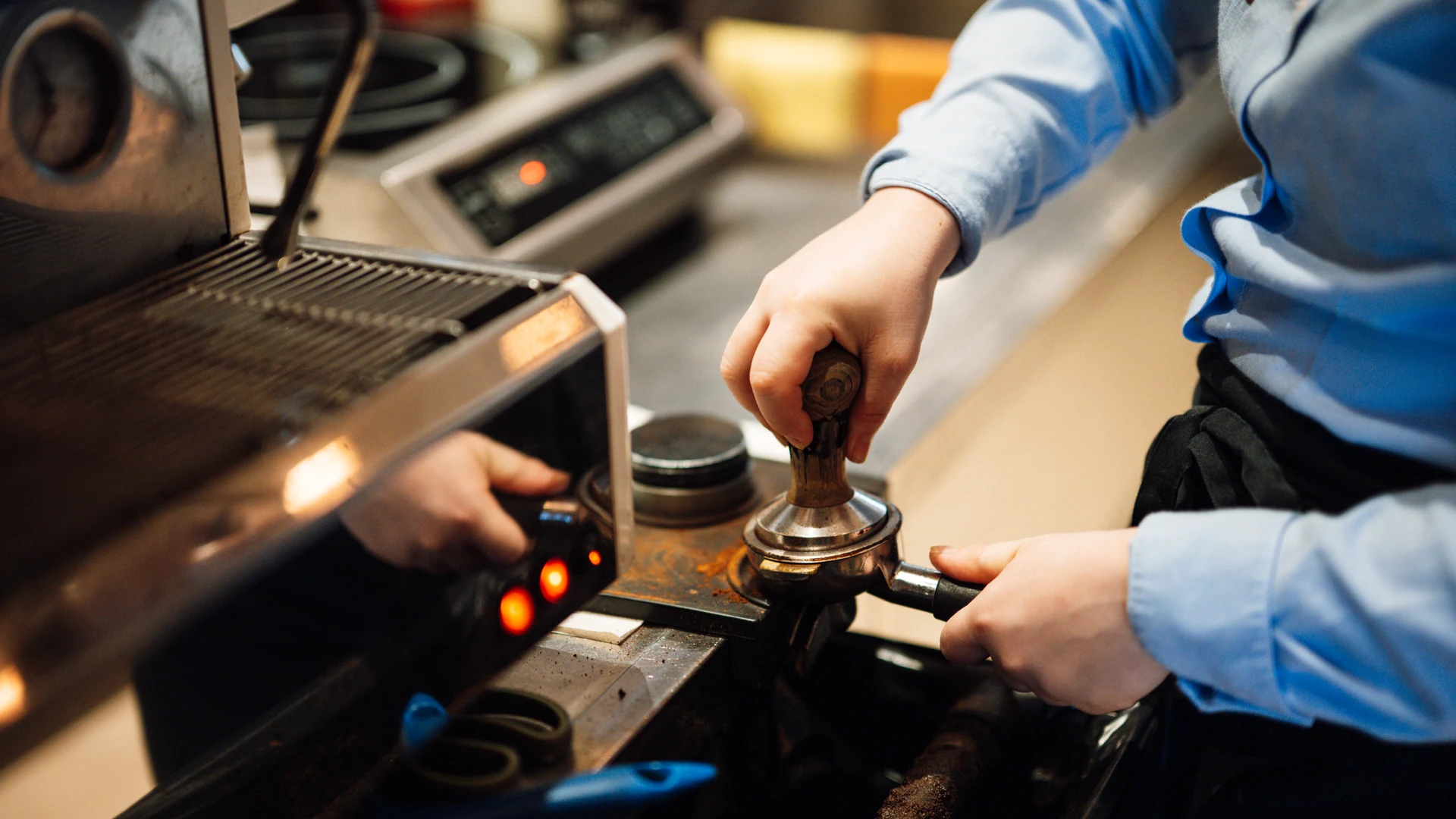
Ella Coffeehouse opens its first franchised location at 6651 Woolbright Road in Boynton Beach on July 18, ten years after the Italian-style coffee brand started and three company-operated shops into its run. The franchisee is Mein Holdings, LLC, run by Carl Huschai and Fritz Richardson, under a multiple-unit agreement. Chief Operating Officer Will Coyne called it “an exciting milestone,” which it is, though the more useful part sits underneath the announcement.
Ella launched in 2016 and built out Coral Springs, Davie, and Plantation on its own balance sheet. The Boynton Beach shop is the first one the company will not operate itself, and that shift is the entire story for anyone in South Florida F&B thinking about what their own business is worth.
Ten Years and Three Shops Before the Fourth
The timeline deserves attention because it runs against how operators usually talk about franchising. Ella spent a decade running its own units before licensing the concept to anyone else. Three company shops is not a large footprint, and the brand could have chased franchise fees years earlier at a much lower standard of proof.
Instead the company kept the operating risk on its own books long enough to learn what the concept actually requires. An exclusive bean blend, a pastry and breakfast program, a lunch daypart, and seasonal items all have to work the same way in a store the founders never visit. Getting there takes documentation that most independent operators never build, because running the shop yourself never forces you to write any of it down.
Franchising Is a Transferability Test
The reason most independent coffee businesses sell at a discount has nothing to do with revenue, and everything to do with the fact that the business is the owner. The vendor terms live in his phone, the schedule lives in her head, the regulars come because they know the person behind the counter, and the recipes exist as muscle memory. Take that operator out and the business changes, which is precisely what a buyer is afraid of.
Franchising forces the opposite discipline onto the founders, because handing a stranger the brand and expecting the same cortado in Boynton Beach that a customer gets in Plantation means everything has to move out of their heads and onto paper. Training, build-out specs, supply agreements, recipes, service standards, and the unit economics all become documents a third party can follow.
Those documents are the same asset a buyer pays a premium for. A brand that can be franchised has already proven it can be transferred, and transferability is most of what separates a business that sells at a multiple from a business that sells for the value of its equipment. Operators weighing an appraisal usually discover that the gap between what they hoped for and what the business supports is a documentation gap, not a sales gap.
A Multi-Unit Franchisee Underwrites Like a Buyer
Mein Holdings committing to several locations before the first one opens carries its own information. A franchisee putting capital behind multiple units has done the same diligence a buyer does. They have read the unit economics, checked the buildout costs against the returns, and concluded the model holds up in a market the brand has never operated in.
That is third-party validation of a kind an owner cannot manufacture. Huschai and Richardson have no sentimental attachment to Ella and no reason to accept the founders’ version of the numbers. Their commitment says the numbers survived an outsider’s scrutiny, which is a more useful signal about the concept than any amount of company-side optimism.
Boynton Beach also puts the brand in Palm Beach County for the first time, roughly forty miles north of the Broward cluster where all three company shops sit. Franchising that market entry means the brand tests new territory on someone else’s capital, with the franchisee carrying the buildout and the operating risk.
South Florida Operators in the Same Position
Most owner-operators across South Florida should never franchise their concept, and plenty of brands have destroyed themselves licensing a model they had not finished proving. The sequence Ella followed is the part that transfers, because it maps onto exit preparation almost exactly.
Building systems a stranger can operate is the work that raises the value of a business whether the eventual outcome is a franchise agreement, a sale, or a handoff to family. Franchising is one exit that leaves the brand in the owner’s hands while turning the systems into revenue. Selling is another, and the same documentation drives the price in both. A business that cannot be handed to a franchisee generally cannot be handed to a buyer either, at least not at the number the owner has in mind.
Watch whether Mein Holdings opens its second unit on schedule. A multi-unit agreement that stalls after the first store means the model traveled worse than the paperwork suggested, and that will show up in what the brand can command from the next franchisee or the next buyer.
Sources
Businesses Mentioned
Tags