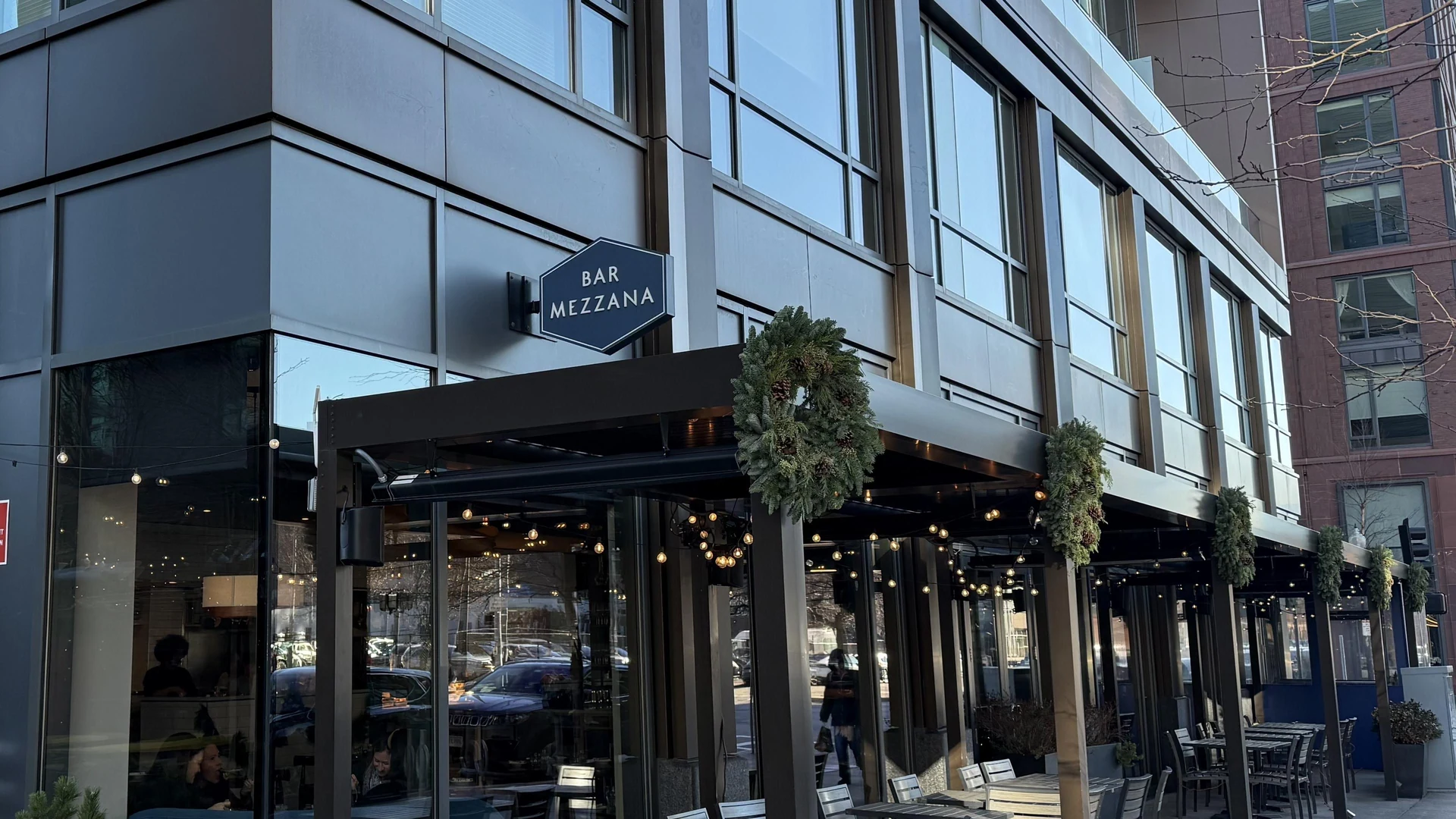
Traveler Street Hospitality will close Bar Mezzana, Shore Leave, and No Relation on New Year’s Day, and chef and co-owner Colin Lynch has attributed the decision to the terms of a lease renewal rather than to the performance of the restaurants.
Bar Mezzana opened in June 2016 at 360 Harrison Avenue in the Ink Block development and marked ten years this past June. Shore Leave, the group’s subterranean tropical lounge at 11 William E. Mullins Way, opened in the fall of 2018, and No Relation, a nine-seat sushi bar, operates inside it. National Development holds the leases, and Lynch has described the relationship with the landlord as a strong one. Black Lamb, the group’s South End brasserie, keeps operating, while FiDo, its Allston pizzeria, closed in June.
The Renewal Terms Made the Decision
Lynch told the Boston Globe that “the new lease would have entailed a strain on the business” and that the group “would have limped along” under it. He also said “it’s not like we didn’t see it coming,” and that after ten years “we’re really proud of everything we’ve done here.”
For an independent operator, a renewal date functions as a scheduled referendum on the business whether or not the owner treats it that way. A ten-year run, a kitchen with a following, and a landlord in good standing did not change the arithmetic once the new number arrived. Rent that supported a 2016 buildout is a different figure in 2026, and the concept has to clear it against today’s food cost, today’s labor cost, and today’s cover count. The lease itself is where that gets settled, and the terms on offer at renewal decide whether a concept has another decade in it.
Two Spaces, One Negotiation
Concentrating several concepts inside a single development is efficient for a group right up until the renewal cycle arrives, because the leases come due together and one negotiation decides multiple restaurants at once. Traveler Street built Shore Leave and No Relation into one subterranean space a short walk from Bar Mezzana, which put three of its five concepts inside the same National Development project. Boston groups have been stacking concepts into shared footprints for years now, and the model concentrates renewal risk along with the operating efficiency.
Black Lamb sits on a separate lease elsewhere in the South End and continues to trade, which is where the decision shows its shape. The group is holding the assets whose leases still work and releasing the ones that do not.
Closing Rather Than Transferring
An operator facing renewal terms that do not work has three moves available. Signing and absorbing the increase keeps the room open on someone else’s terms. Marketing the business and assigning the lease puts the location and the buildout to work in the valuation. Closing the doors ends the exposure and writes off whatever the brand was worth.
Traveler Street took the third option on both Ink Block spaces, and when a group with this much brand equity closes instead of transferring, the terms usually would not have supported a buyer either. Any buyer underwrites the same rent on the same square footage. Goodwill attached to named founders travels poorly in a sale, so transferable value concentrates in the physical assets, the location, and the license. That pattern has repeated across Boston this year, including a fifteen-year run that ended at 25 School Street rather than changing hands.
Six Months Is a Working Runway
The announcement arrived roughly six months ahead of the closing date, framed as time for the staff to line up their next jobs. That window is also the most valuable one an exiting restaurant gets. Equipment, furniture, and a leasehold have a live market while a room is still trading and a much thinner one after it goes dark and gets stripped for parts. An operator who runs a marketed asset sale against a known closing date recovers materially more than one who calls a liquidator in January.
The License Is Its Own Asset in Massachusetts
Boston’s on-premises licenses remain quota-limited, which keeps a clean license among the most liquid pieces of any restaurant sale in the city. The 2024 home rule petition added 225 licenses, the largest single addition to the quota since the end of Prohibition, and only 12 of those were transferable all-alcohol licenses. Another 195 are restricted to specific ZIP codes and 15 are community space licenses for non-profits, theaters, and outdoor venues. Sixty-one businesses have taken new licenses since the law passed. The older transferable licenses still carry resale value the restricted ones do not, and an operator approaching a renewal decision should price the license separately from the business it currently serves.
Boston’s Mid-Decade Leases Are Coming Due
Independent groups signed a wave of Boston leases in the middle of the last decade, and those renewals are arriving now against a rent basis set in a very different market. The premium corridors are already sorting their tenants for throughput, and the South End is showing the same pressure one renewal at a time.
Operators who work the renewal date backward, eighteen to twenty-four months out, still get to choose among signing, selling, and closing while all three remain open to them. Corbett Restaurant Group advises operators on that decision across Boston and New England, and when a renewal is approaching and the numbers are moving the wrong way, a confidential conversation about what the business and the lease are worth is the right first step.
Sources
- The Boston Globe, “Bar Mezzana, No Relation, and Shore Leave will close on New Year’s Day. Colin Lynch explains why.” (2026-07-24)
- Boston Restaurant Talk, “Bar Mezzana, No Relation, and Shore Leave in Boston Are Closing” (2026-07)
- NBC Boston, “Boston’s Bar Mezzana, No Relation and Shore Leave are reportedly closing” (2026-07)
- NBC Boston, “Bar Mezzana Team to Open Shore Leave (a New Tiki Bar) in Boston’s Ink Block Area”
- Boston.gov, “Mayor Michelle Wu Celebrates New Beer and Wine State Legislation and Promotes Available Liquor License Opportunities Available to Businesses”
Businesses Mentioned
Tags